
First, crypto. Then, NFTs. Now, the metaverse. What’s next?! Iconic, premium brand Nike has just recently filed seven trademark applications for “virtual goods.” Indeed, Nike has taken just do it to the metaverse, filing for “virtual goods” trademarks and frankly continuing to just do it. Specifically, Nike hopes to protect digital goods in non-fungible tokens, commonly called NFTs, or in videogames like Fortnite. Notably, NFTs are a unique, one-of-kind, non-interchangeable unit of data stored in blockchain. Simply put, NFTs can be anything digital––drawings, music, closets––so Nike, for example, has now marked its intent to make and sell virtual branded sneakers and apparel. I must admit, virtual Air Jordan’s and virtual Air Force 1’s to wear around the metaverse sounds pretty cool to me; I can sport the same Nike fit to an in-person game and a virtual sporting event . . . without being an outfit repeater! Sign me up.
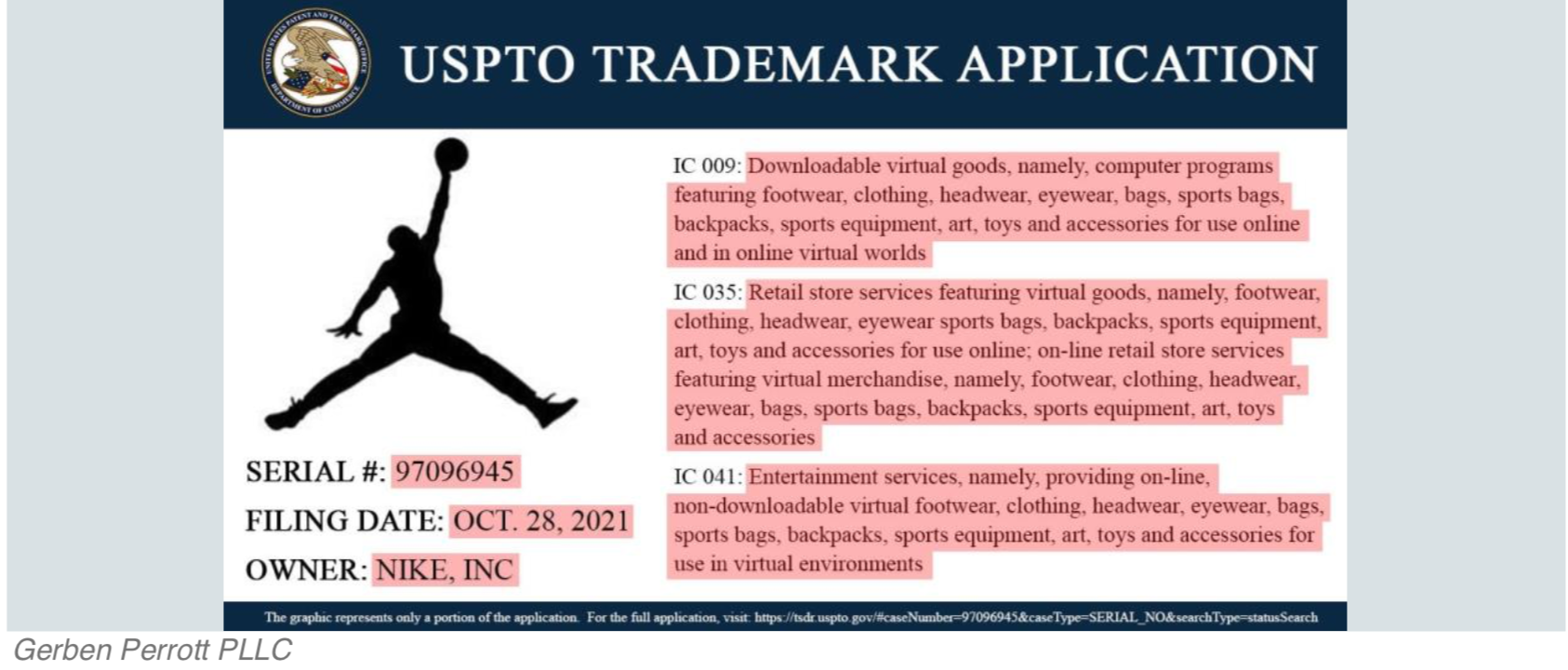
According to the U.S. Patent and Trademark Office (USPTO), Nike has filed applications reflecting the general brand and its distinct goods. In particular, Nike’s submitted applications include “Nike,” “Just Do It,” and the iconic swoosh logo itself as well as “Air Jordan” and “Jumpman” logos. Ironically, in protecting their trademarks on the metaverse, some sort of familiarity now accompanies us on our journey through the novel virtual universe. Further, Nike has posted job openings for virtual design roles, including a “virtual material designer of footwear.” Moreover, Nike currently waits on the USPTO to approve its patent application for the NFT: “Cryptokicks.” An innovator, worldwide influencer, and platform leader, Nike is indeed elevating human potential and daring to design the future of sport.
The potential to live a double life is now here, front and center. In fact, as we move into a world largely defined by crypto and NFTs, companies, too, cash in on their dual existence in a whole new revenue stream from the digital closet. Importantly, branding and consumer loyalty are fundamentals to trademark law; the trademark embodies the consumer loyalty that ties the consumer to the brand. Hence, the Nike v. Adidas battle. Particularly, as many of us are digital natives, we have grown up with the Internet and have strong ties to both the online and offline. Thus, since we are loyal to the digital, it makes sense for us to bring our loyalty to both worlds.
Now that Nike has joined Facebook to the metaverse party, who’s next?
 on court with steph